


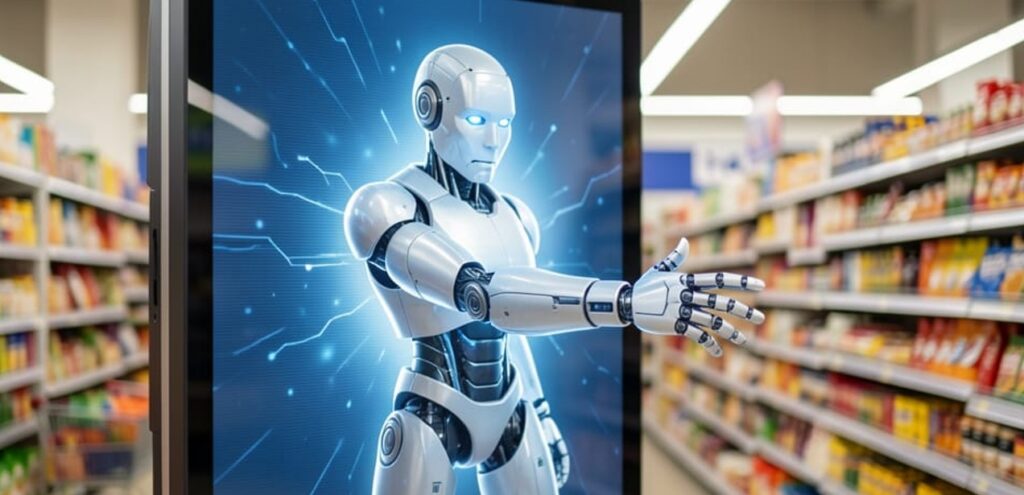
The AI revolution is creating new opportunities for physical stores while fundamentally threatening online marketing and e-commerce.
Ironically, the highest stage of digitalization is bringing about an unexpected reversal. For three decades, becoming “more digital” essentially meant virtualization: online marketing, e-commerce, and more recently delivery apps. Traditional retail stores increasingly appeared outdated as places for advertising and sales. The ongoing decline of brick-and-mortar retail seemed to confirm this thesis, further accelerated by the COVID-19 pandemic.
Yet Generative AI and the emerging wave of agentic AI are undermining the very foundations of online marketing and e-commerce in ways that are only gradually becoming apparent.
AI Bots Are Taking Over the Internet and Devaluing It as an Advertising Environment
The widespread enthusiasm surrounding chatbots and AI agents is increasingly causing concern among advertisers and online retailers.
Today, more than half of all “user-generated” content on the internet is produced by Generative AI. Alongside thoughtfully crafted content created by real people using AI tools, an ever-growing flood of pure “AI slop” is filling the web (content generated solely to attract advertising revenue). Instead of appearing at the heart of authentic communities, online advertisements increasingly find themselves sandwiched between disposable algorithm-generated content.
At the same time, bots now account for well over half of all internet traffic. While brands seek to reach consumers, it is increasingly software that clicks, likes, shares, and comments. As a result, more than $100 billion in advertising budgets are wasted globally every year. Meanwhile, depending on the region, between 36% and 68% of real users reject all cookies, making them effectively untrackable. This begs the question: how much is a purchased click, app download, or comment worth?
AI Agents Are Destroying the Business Model of Online Marketing and E-Commerce
The greatest threat is still ahead: Where previous generations of bots merely scraped content, interacted with websites, and generated clicks, the new generation of AI agents can complete entire transactions independently.
This creates a profound challenge for the existing business model of online marketing and e-commerce. An AI agent follows its assigned objective relentlessly and purchases exactly what it was instructed to buy - nothing else and nothing more. It evaluates product specifications, price, perhaps delivery times, and the credibility of the merchant. All of this can be communicated through a structured data format.
As a result, many of the sophisticated mechanisms designed to influence human purchasing behaviour suddenly become irrelevant: retargeting, dynamically personalized websites, recommendation engines, upselling offers, differentiation through design, and superior user experience. None of these factors will significantly influence the purchasing process when AI agents become the primary buyers.
At the Same Time, Big Data and AI Are Making Physical Retail Smarter
One industry's challenge becomes another industry's opportunity: To the same extent that Generative and Agentic AI threaten online business models, physical retail can benefit from advances in analytical AI.
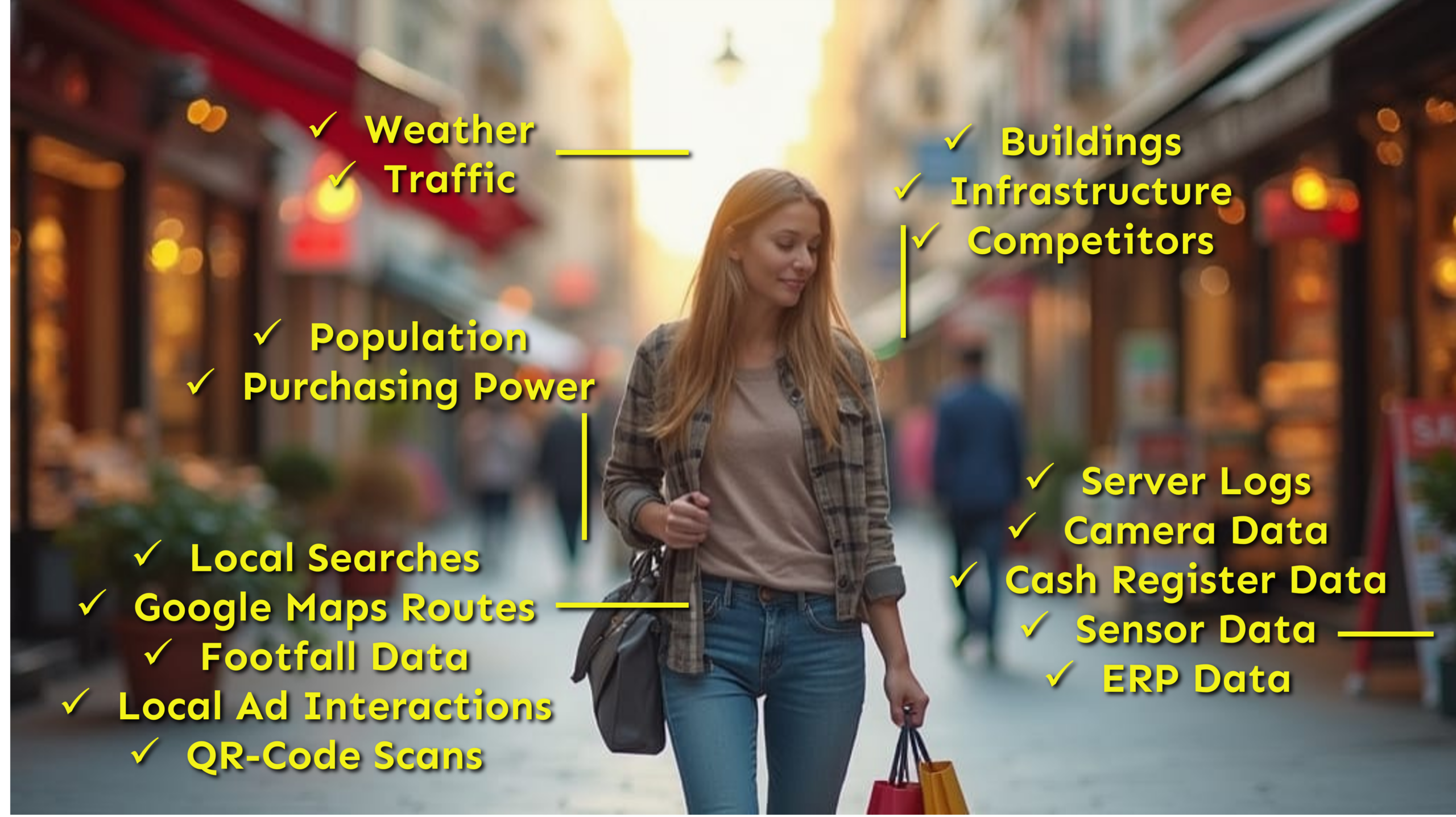
The costs of sensors and computing power have fallen dramatically, while smartphones and smartwatches equipped with GPS, NFC, and Bluetooth have made local behavioural data available at unprecedented scale and precision. Retailers can now determine far more accurately how many people are in their vicinity, when they are receptive to marketing messages, what interests them, which advertising they have been exposed to, and, of course, what they ultimately purchase.
To achieve this, retailers simply need to consolidate data from their own touchpoints, such as in-store advertising displays and point-of-sale systems. Forward-thinking businesses can enrich this information with third-party data reflecting the store's environment—for example, audience data from digital out-of-home advertising networks, local Google search trends, weather and traffic information, or footfall data derived from mobile network operators.
This is not a futuristic vision. It is already economically and technically feasible for retailers of various sizes through analytical AI platforms such as NEUTRUM (see, for example, the case studies involving Küchentreff and Vodafone). NEUTRUM (siehe z.B. diese Fallstudien von Küchentreff and Vodafone).
Local Retail Reaches and Influences Real People
Unlike online metrics, these data sources are largely immune to bots and AI agents, and they do not depend on cookies. While local Google search volumes are already difficult to manipulate, measurements of vehicle and pedestrian traffic, interactions with advertising media such as bus-stop displays, and everything that occurs within the store—from engagement to purchase—remain beyond the reach of even the most sophisticated AI agents. What happens here are genuine interactions with real people.
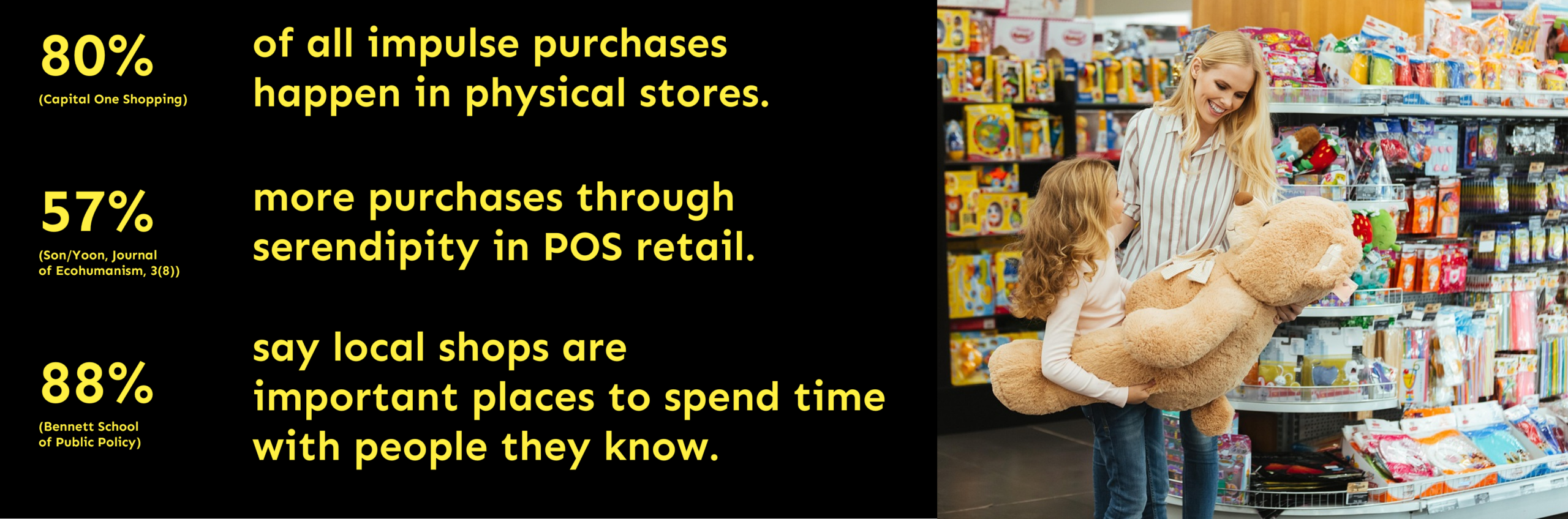
This may become marketers' last major opportunity to meaningfully influence purchasing decisions.Even today, before the widespread adoption of agentic AI, approximately 80% of impulse purchases occur in the physical world rather than in front of a screen. Customers typically buy more than half again as much as they originally intended because they discover something interesting while shopping. This advantage could become an extraordinary competitive asset for physical retailers in the years ahead.
The fact that advertising campaigns reach only humans rather than bots is rapidly becoming a premium feature. This is especially true when retailers leverage smarter retail media systems to deliver advertising that is more contextual, relevant, and location-specific, maximizing the short path from message to purchase and benefiting from the relatively low level of media competition inside stores.
Finally, local retail is also becoming increasingly valuable as a source of market research. As trust in impressions, clicks, engagements, and downloads declines, movement patterns, shelf interactions, and point-of-sale data may emerge as the new currency for understanding customer behaviour.
Is Retail Ready to Seize This Opportunity?
Whether the retail industry can capitalize on this opportunity is not a question of technology—it is a question of mindset.
To date, most retailers have made limited use of their data. Procurement, inventory management, and shelf replenishment have become increasingly intelligent, but the customer experience itself has remained largely unchanged from the twentieth century. Even loyalty programs often function little differently from traditional discount cards. Retailers that fail to rapidly build both capabilities and trust will be left behind. Success requires not only technological excellence but also ethical data practices that preserve consumer confidence.
Any retailer aspiring to become a true “source of truth” must genuinely understand its customers and provide brands with reliable insights into consumer preferences, along with complete transparency regarding the effectiveness of marketing investments—including independent verification.
This often conflicts with the traditional retail instinct to keep information closely guarded to maximize negotiating leverage with manufacturers. Yet how much stronger could that position become if the retail store itself were recognized as the ultimate proving ground for marketing effectiveness and sales performance?




 German