



Advertising pioneer John Wanamaker famously said that he knew for sure he was wasting half of his advertising budget. He just didn't know which half. There is, however, a reliable solution to this problem: stochastic modeling. What used to be a time-consuming, expensive process is now within reach for the many, thanks to Big Data and AI.
Online advertising is no longer a way out of the ROAS dilemma
This development comes not a minute too soon. At this point in time, most advertisers experience a rude awakening from a dream they have dreamt over the past two decades: that they could simply switch to online marketing and e-commerce and they would no longer need to deal with such questions as attribution – because after all, you can measure everything with cookies and parameters, right?
Beside rampant digital ad fraud, the era of ever-increasing measurability on the internet is coming to an end:
- Data protection regulations (e.g. GDPR) have made online cookies problematic. To the extent that cookies enable user identification, they are classified as personal data and must comply with GDPR requirements. The industry has been working hard on alternatives, but so far none can be considered to be both GDPR-compliant and effective. Opt-out rates have continued to rise. High coverage is therefore no longer realistic.
- Tech giants like Google, Meta, Amazon and Microsoft have shown little interest in standards. Their aim to keep other players outside the walled gardens of their own ecosystem and confine their customers inside. And these providers together account for over 60 percent of digital advertising revenue. They have more to lose than to gain from transparency.
- Without the ability to take independent measurements, it is hard to make informed decisions even within walled gardens. Google, for example, does not allow direct comparisons between Performance Max and SEA. So, how do we know which format performs better or whether we benefit from synergy effects when combining the two?
There's no way around it: if you want to have more insight than John Wanamaker at the beginning of the last century, you’ll have to step outside your comfort zone.
Data Integration and Modeling: the nerdy Superheroes
But what is the alternative to tracking devices and publisher/platform data? How can you break out of the silos and take control? The higher powers of statistics and modeling show the way - without you having to become a major expert!

It's actually quite simple: if you have control over your own data, you can use it to determine how much revenue, sales, or brand awareness you have or could have achieved without additional marketing measures. All you need is a longer time series window of relevant data, such as that collected in CRM, server logs or regular surveys.
Intelligent algorithms can identify seasonal patterns and long-term trends within seconds, adjust for random fluctuations; they can thus establish a “baseline” – an expected value for “keeping still.” If an advertising activity actually brings benefits, it is easy to determine whether this has led to a stable increase in sales, turnover, etc. above this baseline, and whether this increase can be attributed to the measure with a high degree of certainty. Here is the amazingly simple logic: if it is really to my advantage, I must notice it through an improvement in the target metric.
This approach has great benefits:
- I can make statements that go beyond cookie gaps and the limits of walled gardens. I can also validate values measured by cookies or reported by publishers and platforms: I am supposed to have generated 1000 new leads, but there are no additional sales coming in via forms, the call center or the shop. Odd…
- I can now measure the effect of channels that had never been trackable directly through cookies or other parameters: Will I reliably get more visitors at my POS if I run Out-Of-Home placards? How far away from my store will this work?
- I can understand the interactions between different advertising media, because the algorithms can examine the interplay between the channels: Do I get a reliably higher conversion rate from my affiliates when I run TV ads? If so, are the additional sales worth the advertising costs?
The prerequisite is that you integrate your data across the various systems (e.g., ERP, CRM, analytics) and merge it with the data from your advertising activities.
Thanks to AI, data collection and modeling are no longer a pain!
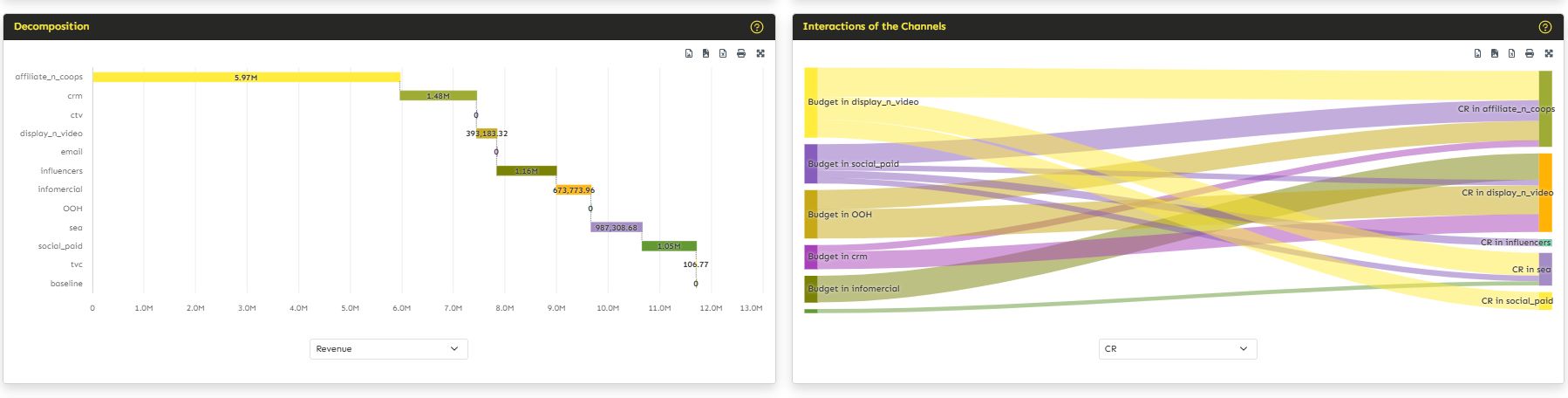
Screenshot from the NEUTRUM EVO Optimizer
If this approach is so good, why has it not been done before?
The answer is simple: for most marketers, statistics are somewhat of the final enemy - and even for statisticians and data scientists such calculations are not trivial. That's why such modeling has been slow, labor-intensive and expensive to adopt. Until now.
The same applies to the integration of 1st, 2nd and 3rd party data across systems: Anyone who has ever tried to create a meaningful common view in Microsoft Excel or PowerBI using differently formatted exports from 20 different tools knows how annoying, tedious and error-prone it can be.
With Analytic AI, both data integration and modeling can be completely automated – with at least the same quality as human work, without errors, at much faster rate… and tens of thousands of times faster. This is why NEUTRUM EVO Optimizer has been named “Best Business Technology Solution for Marketing & Communication” (International Business Awards 2025). At the touch of a button, you can see in real-time which of your channels, campaigns and ads are really effective in which combination. You can also get recommendations on the best budgets and media mixes.
Most people in Northern Europe had been dreaming of voyages to the sunny Mediterranean for centuries - it took technology in the form of cars, trains and airplanes to actually make this a viable option for almost everyone.
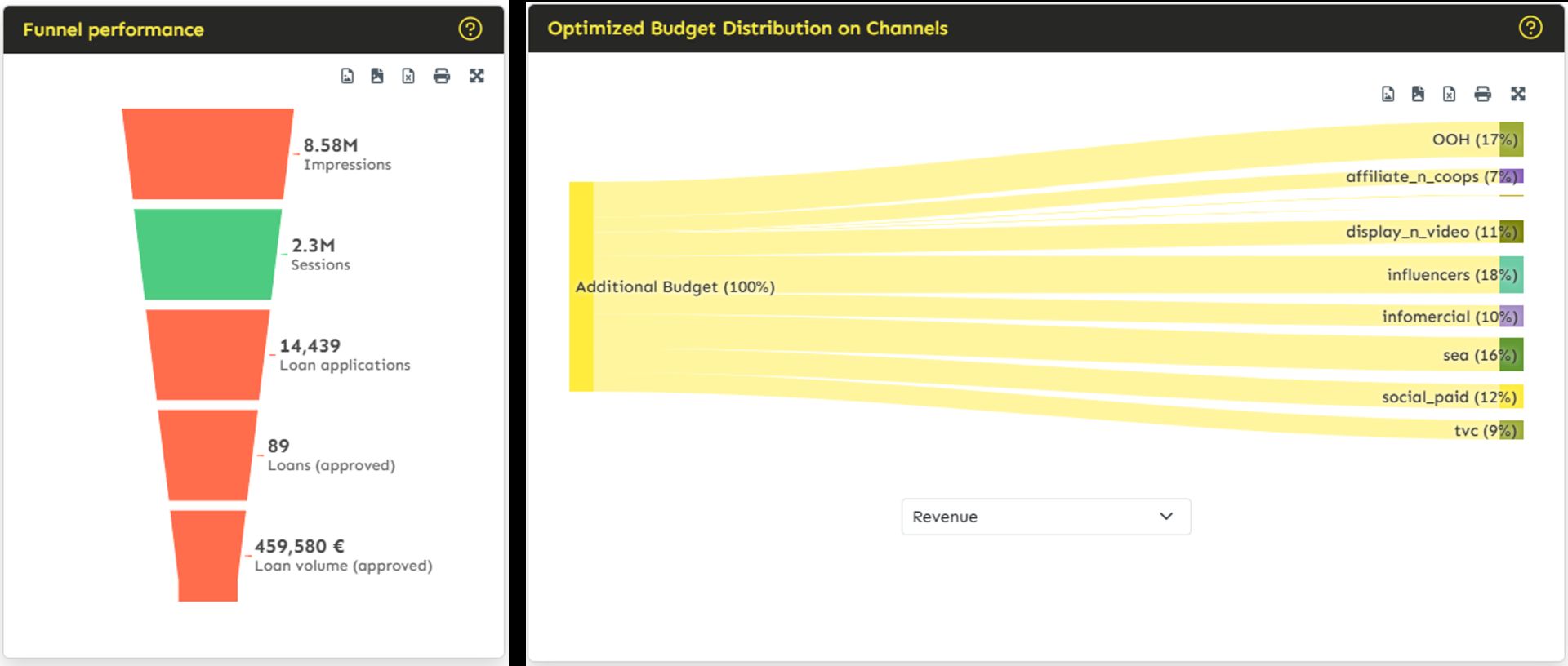
Screenshot from the NEUTRUM EVO Optimizer
A new perspective for targeting – beyond the data kraken
Thanks to the internet as a 24/7 data factory, this approach also allows to declare independence from publisher and platform data in the domain of targeting.
I no longer have to just believe it when I hear that 30% of “lifestyle-conscious consumer families in a posh neighborhood” will read a particular article. Instead, I can continuously scan the web myself – content, search/surf/posting behavior, engagements, reviews, and so on – to determine in which channels and at what times people are particularly enthusiastic about the topic I want to write about, and what triggers them most.
When I feed the data into Machine Learning models, I get reliable predictions about when and where I should be and what message I should use to be successful. I don't need personal data or profiles to do so: I don't care if the user ABC is a metrosexual motorcyclist, as long as the prediction is sound - that good sales can be made at this time on this channel, with this message and this delivery. This is what our NEUTRUM AI Targeterdoes, in conjunction with the NEUTRUM Topic Navigator.
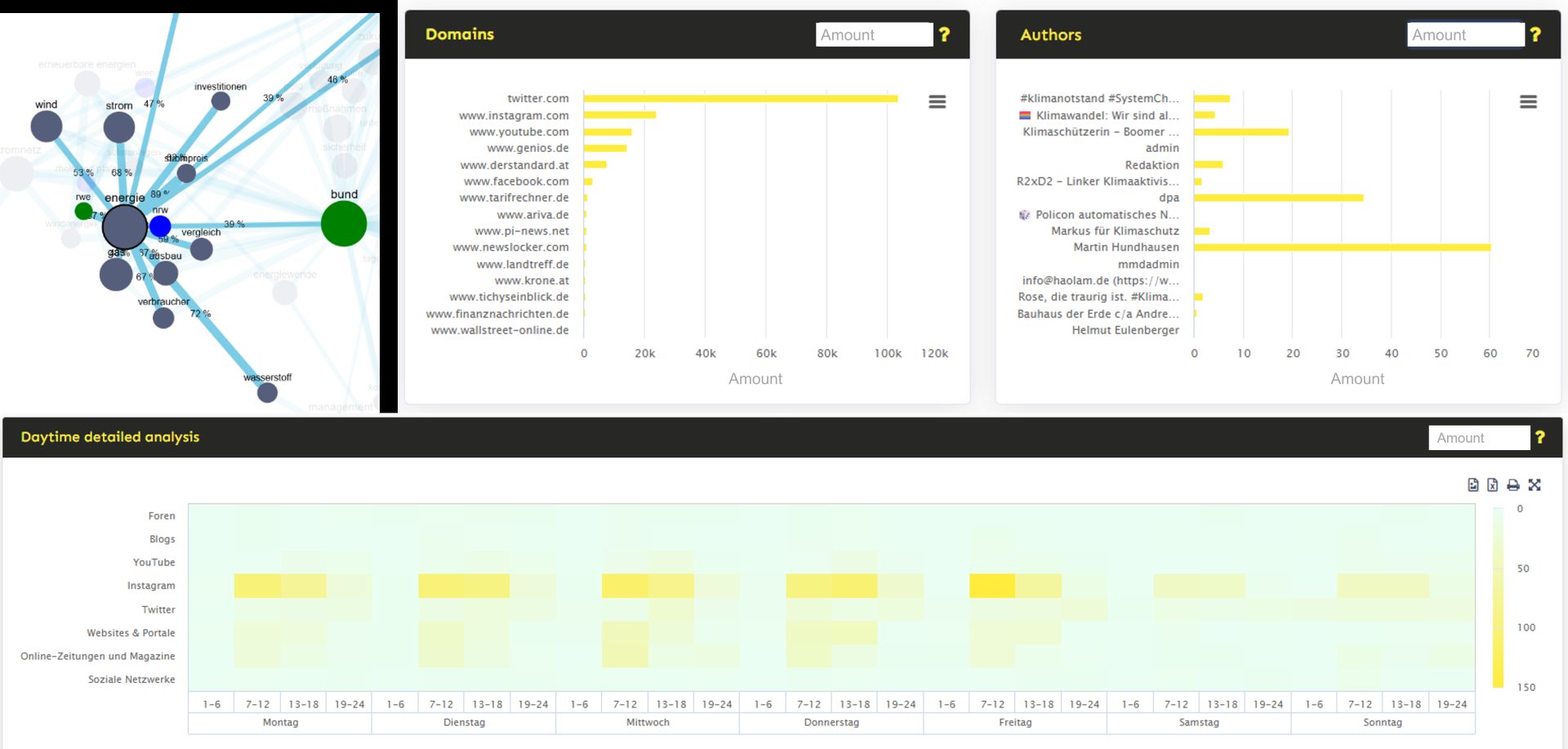
With statistical models, I can no longer place cutouts of “personas” in my office. But this form of targeting actually works in real life, publishers and platforms can't fool me anymore and data protection officers are happy.
Explainably successful: declaration of independence with NEUTRUM
The AI in NEUTRUM.AI is not rocket science - it is a helpful technology that automates the truly complicated data collection, consolidation and modeling, helping you build your own data treasure trove and models trained for & on your business. It thusly empowers you to plan better and manage your marketing more successfully, for ever greater success and ever less wasted budget.
Unlike virtually all other systems on the market, NEUTRUM’s recommendations are explainable: the algorithms can disclose at any time the data and models on which they have based their recommendations. And the data always belongs to you. This lets you optimize with models specific to you, and with models that you actually understand.
NEUTRUM is so easy to use that a one-time introduction lasting one hour is enough to take it for a ride on your own. We guarantee it.
Do you want clarity about your ROAS and independence from publishers and platforms? Schedule your NEUTRUM demo now!!


 German